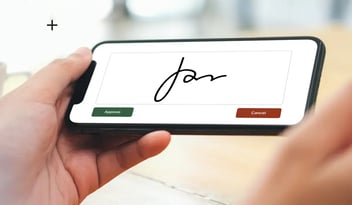


Many organisations are discovering the same thing: the real challenge is rarely the signature itself. It is everything that happens before and after.
As digital processes mature, organisations are no longer searching for a tool that simply places a signature on a document. Instead, the focus has shifted towards creating a secure, documented and coherent digital communication flow that supports governance, compliance and everyday operations.
From isolated steps to connected workflows
In many organisations, key processes still consist of fragmented steps handled across multiple systems and manual touchpoints. Data is collected in one place, identity is verified in another, documents are signed somewhere else, and distribution and archiving happen separately.
When these steps are connected into a single workflow – from data collection and identity verification to signing, digital distribution and archiving – the impact is significant:
- Fewer manual steps and handovers
- Stronger governance and traceability
- Reduced operational and compliance risk
- Clearer processes that teams can actually work with in practice
What emerges is not just efficiency, but clarity. Responsibilities become visible, documentation is consistent, and digital processes start to support the organisation rather than slow it down.
Nordic requirements demand Nordic solutions
Across the Nordic region, organisations operate under shared expectations around security, identity, data protection and public trust. These expectations shape how digital communication must work – particularly when it involves legally binding documents, sensitive data or regulated processes.
This is where many organisations encounter a common limitation: global, one-size-fits-all tools are rarely designed for Nordic realities. They may offer signing functionality, but lack native support for Nordic identity standards, distribution channels or compliance requirements.
Nordic organisations need solutions that are built for the region – not adapted to it as an afterthought.
When compliance and usability work together
When identity, distribution and compliance are integrated into one coherent flow, digital communication becomes both more secure and more human. Processes are easier to understand, easier to manage and easier to trust – for both employees and recipients.
Instead of navigating multiple tools and manual checks, teams gain a workflow that reflects how work actually gets done.
Building digital communication that lasts
For organisations working with compliance, governance or digital workflows in the Nordics, the goal is no longer isolated optimisation. It is about building connected, future-proof processes that can scale, adapt and remain trustworthy over time.
If you would like to learn more about how Addo Sign supports secure, Nordic-ready digital workflows, we are happy to share insights and help onboard your organisation.
How organisations get started
Getting started does not require a complete overhaul of existing systems or processes. Most organisations begin by identifying one or two critical workflows where manual handling, fragmented systems or compliance requirements create friction.
From there, digital workflows can be introduced gradually – connecting data collection, identity verification, signing, digital distribution and archiving into a single, structured flow. This allows teams to experience value early, while maintaining full control over governance, security and compliance.
Implementation typically focuses on:
- Mapping existing approval and communication processes
- Aligning identity, signing and distribution with regulatory requirements
- Integrating digital workflows into the current system landscape
- Enabling teams with clear, documented processes rather than new complexity
By starting small and building step by step, organisations can establish a scalable digital communication framework that supports both everyday operations and long-term governance.

Esben Emborg
Today, I work at Addo Sign with communications and marketing, drawing on my experience in design and digital products to make complex topics easier to understand and more accessible.